

Where Beauty Meets Danger, Ancient Folklore,
and the Forbidden Wisdom of Nature
“Not every flower in the garden was meant to be gathered. Some were simply meant to be admired, respected, and left to whisper their secrets beneath the moon.”
There is a particular kind of garden that seems to belong to another world.
A garden where ivy curls around weathered stone walls, where moonlight settles upon delicate blossoms, and where the evening breeze carries the faintest suggestion of something ancient and mysterious.
Perhaps there is a crooked iron gate, its hinges softened by moss.
Perhaps an old stone fountain rests beneath a canopy of tangled branches.
And perhaps, hidden among the roses and lavender, grow five extraordinary plants whose beauty has inspired centuries of fascination, superstition, and caution.
These are the plants of the enchanted poison garden.
Beautiful.
Mysterious.
And, in some cases, extraordinarily dangerous.
For generations, poisonous plants have appeared in mythology, witchcraft folklore, medieval herbals, literature, and the legends of wise women and wandering healers.
They have been associated with prophetic visions, protective spirits, enchantments, transformation, and the mysterious boundary between life and death.
Yet their stories carry an important lesson.
Nature is not always gentle, and something beautiful is not necessarily harmless.
The poison garden invites us to explore this delicate relationship between wonder and caution.
It teaches us to appreciate the extraordinary botanical world without believing that every plant must be touched, harvested, brewed, or used in ritual.
And perhaps that is part of its deepest wisdom.
Some magick is found in gathering.
Some magick is found in growing.
And some magick is found simply in knowing when to leave something undisturbed.
So, dear reader, imagine yourself standing before an ancient garden gate.
The moon is rising.
The shadows are growing long.
And somewhere beyond the ivy-covered walls, five mysterious botanical companions are waiting to share their stories.
Shall we enter?
The Ancient Mystery of the Poison Garden
Long before modern botanical science explained the chemical compounds responsible for plant toxicity, people understood that certain plants possessed extraordinary and sometimes frightening effects.
Their properties became woven into folklore and religious beliefs.
Some were associated with spirits and supernatural encounters.
Others appeared in stories of witches, sorcerers, magical protection, and dangerous enchantments.
Plants that could alter perception or cause severe illness were sometimes interpreted through the language of spirits, prophecy, or otherworldly experiences.
Over time, these beliefs helped shape the mythology surrounding Europe's most notorious poisonous plants.
Today, we can appreciate their history while recognizing that their toxic effects have biological explanations.
In modern botanical magick, these plants can be explored through symbolic correspondences, mythology, artwork, storytelling, and meditation.
Their magical associations are cultural or contemporary interpretations, not scientifically demonstrated supernatural properties.
A note before entering the garden
The five plants in this collection are genuinely poisonous. Several can cause life-threatening poisoning through ingestion, and some present risks through handling or contact with damaged plant material.
They should never be used in homemade teas, tinctures, incense, smoke blends, oils, baths, skin preparations, or ritual ingestion.
For a home with children or pets, a poison garden is best appreciated through botanical illustrations, books, or visits to professionally managed gardens rather than cultivated at home.
Our journey is one of folklore, symbolism, botanical history, and respectful observation, not instructions for using toxic plants.
Now, let us meet the five mysterious inhabitants.
1. Belladonna: The Beautiful Lady of Shadows
Atropa belladonna | Deadly Nightshade
The Enchantress of Mystery, Illusion, and Hidden Truths
Deep within the imagined poison garden grows a plant whose name seems almost too beautiful for its reputation.
Belladonna.
The beautiful lady.
With dusky purple, bell-shaped flowers and glossy dark berries, belladonna possesses an appearance that seems perfectly suited to an ancient fairy tale.
But this is no ordinary woodland beauty.
Belladonna is one of Europe's most infamous poisonous plants.
Its botanical name, Atropa belladonna, carries a particularly fascinating connection to mythology.
Atropos was one of the three Fates in ancient Greek tradition.
According to mythology, the Fates measured and determined the thread of human life.
Clotho spun the thread.
Lachesis measured its length.
And Atropos cut it.
It is a striking name for a plant associated with danger and mortality.
Belladonna in folklore and witchcraft
Belladonna has long appeared in accounts of European witchcraft, supernatural encounters, and the legendary preparations sometimes called flying ointments.
Historical evidence surrounding these preparations is complicated. Some accounts were shaped by accusations, sensational stories, and later interpretations rather than reliable descriptions of actual practices.
Nevertheless, belladonna became deeply embedded in the popular imagination as a plant associated with witches, visions, enchantment, and forbidden knowledge.
Its reputation was also influenced by its ability to cause severe delirium and hallucinations when poisoning occurs.
What earlier generations might have interpreted as supernatural experiences can now be understood as dangerous toxic effects.
Magical correspondences
Planet: Saturn, in some modern magical traditions
Element: Water, in some contemporary systems
Symbolic themes: Mystery, illusion, hidden truths, boundaries, transformation
Tarot association: The Moon
These correspondences are symbolic interpretations and are not universal across magical traditions.
The wisdom of belladonna
Belladonna reminds us that appearances do not always reveal the whole truth.
Something may be beautiful and still require caution.
Something may be mysterious without needing to be explored firsthand.
And something may invite our curiosity while also deserving a respectful distance.
Belladonna's symbolic lesson: Discernment is a form of wisdom.
A belladonna reflection
Without handling the plant, contemplate its story through a botanical illustration or journal entry.
Ask yourself:
Where in my life do I need to look beyond appearances?
What truth have I been reluctant to acknowledge?
How can I honor curiosity without abandoning caution?
Botanical caution: All parts of belladonna are highly poisonous, especially its berries and leaves. Poisoning can cause confusion, rapid heartbeat, dangerously elevated body temperature, and potentially death.
2. Mandrake: The Root That Whispers Beneath the Earth
Mandragora officinarum | Mandrake
The Ancient Keeper of Protection, Transformation, and Earthly Mysteries
If belladonna belongs to the shadows, mandrake belongs to the forgotten places beneath the soil.
Few plants have inspired such extraordinary stories.
Its broad leaves spread close to the earth, while its pale flowers and unusual roots have fascinated generations of storytellers, herbalists, and occult writers.
And it is the root that has made mandrake legendary.
Mandrake roots sometimes develop branching forms that resemble the human body.
A curious botanical feature, certainly.
But to the imagination of the ancient world?
Something far more mysterious.
The legendary screaming root
One of the most famous mandrake legends claims that the plant would release a terrible scream when pulled from the earth.
According to folklore, hearing this scream could bring madness or death.
Medieval stories developed elaborate tales about how the root might be obtained without exposing a person to its supposed cry.
These accounts are folklore, not botanical reality.
Mandrake does not scream.
Yet the legend became so influential that it appeared in literature, magical manuscripts, and eventually modern fantasy.
The plant's humanlike root also contributed to its association with fertility, protection, and sympathetic magick, in which an object's appearance is believed to connect it symbolically to another thing.
Mandrake and ancient traditions
Mandrake appears in ancient Mediterranean and Near Eastern traditions.
Its history includes references to fertility, love, sleep, and medicinal use, although its toxicity makes historical preparations dangerous and unsuitable for modern experimentation.
In magical folklore, mandrake roots were sometimes regarded as protective charms or symbols of prosperity.
Today, their legends remain a fascinating part of botanical history.
Magical correspondences
Planet: Mercury, in some modern correspondence systems
Element: Earth
Symbolic themes: Protection, fertility, transformation, hidden knowledge, personal power
Tarot association: The Magician
Seasonal association: Samhain, as a contemporary symbolic connection
The wisdom of mandrake
Mandrake invites us to consider what lies beneath the surface.
Its most famous feature is hidden underground.
The part that inspired centuries of stories cannot be seen simply by looking at the leaves.
And perhaps there is a lesson in that.
We, too, have hidden roots.
Memories.
Experiences.
Beliefs.
Strengths we may not recognize until life asks us to use them.
Mandrake's symbolic lesson: Your deepest strength is not always visible to the world.
A mandrake reflection
Draw a tree or root system in your journal.
Within its branches, write the qualities you wish to cultivate.
Within its roots, write the experiences and values that support you.
Beneath the earth, where secrets sleep,
May wisdom take its roots down deep.
Through changing seasons, dark and bright,
May hidden strength return to light.
Botanical caution: Mandrake is poisonous and contains potent tropane alkaloids. It must never be eaten or used in homemade herbal preparations.
3. Foxglove: The Fairy Bells of the Enchanted Woodland
Digitalis purpurea | Common Foxglove
The Flower of Fairy Folklore, Enchantment, and Sacred Boundaries
There is something almost impossibly beautiful about foxglove.
Tall flowering spires rise gracefully above the garden, decorated with rows of tubular blossoms.
Their colors range from soft pink and lavender to deep purple and creamy white.
Inside the flowers, delicate spots and markings create patterns that seem designed by the hand of an exceptionally artistic fairy.
It is easy to imagine these blossoms ringing silently in a moonlit woodland.
And, in folklore, foxglove has long been connected with the fairy world.
Foxglove and the fairy folk
The common name foxglove has inspired several interpretations, although its precise origin remains debated.
Folklore has imagined the flowers as gloves for foxes, bells for fairies, or places where tiny woodland spirits might shelter.
In British and Irish folk traditions, foxgloves acquired associations with the fairy realm, enchantment, and caution.
Some stories treated the flowers as beautiful but potentially dangerous places where humans should behave respectfully.
The folklore is not uniform, but the recurring combination of beauty and warning is especially striking.
A flower with a powerful history
Foxglove also occupies an important place in medical history.
In the eighteenth century, physician William Withering systematically studied its use in treating certain forms of dropsy, a historical term for fluid accumulation.
Compounds from foxglove later contributed to the development of cardiac medicines.
This history does not make the plant safe for home use.
Foxglove contains cardiac glycosides that can dangerously affect the heart.
The difference between a medically controlled drug and an unpredictable homemade plant preparation is crucial.
Magical correspondences
Planet: Venus, in some modern magical traditions
Element: Earth
Symbolic themes: Fairy folklore, enchantment, protection, respect, boundaries
Tarot association: The High Priestess
Seasonal association: Late spring and early summer
The wisdom of foxglove
Foxglove reminds us that beauty and boundaries can exist together.
Its blossoms are extraordinary.
Its history is fascinating.
Its presence in folklore is undeniably enchanting.
Yet its toxicity teaches us that admiration does not require possession.
We can appreciate something without gathering it.
We can honor something without using it.
And we can recognize beauty without forgetting our responsibilities.
Foxglove's symbolic lesson: Respecting boundaries is an expression of care.
A foxglove reflection
Imagine an enchanted woodland filled with flowering foxgloves.
Rather than entering the flowers' mysterious world, picture yourself standing quietly at its edge.
Ask yourself:
What boundaries help me feel safe and supported?
Where might I benefit from saying no more often?
Can I appreciate beauty without needing to claim it?
Botanical caution: Every part of foxglove is poisonous. Ingestion can cause nausea, vomiting, dangerous heart rhythm disturbances, and potentially fatal poisoning. It must never be used for homemade tea or remedies.
4. Henbane: The Forgotten Herb of Dreams and Ancient Sorcery
Hyoscyamus niger | Black Henbane
The Shadowed Keeper of Illusion, Folklore, and Discernment
Some plants enchant us with their beauty.
Others enchant us with their strangeness.
Henbane belongs rather firmly to the second category.
Its pale yellow flowers are marked with dark purple veins, creating an appearance that is both delicate and unsettling.
Its leaves are somewhat coarse, and the plant has a reputation for an unpleasant odor.
It is not the sort of flower one would typically place in a cheerful kitchen bouquet.
And yet, throughout history, henbane has held a remarkable place in folklore, medicine, and stories of sorcery.
Henbane in the ancient world
Henbane was known in parts of the ancient Mediterranean and Europe.
Historical sources describe its use in medicinal contexts, while later traditions associated it with intoxication, sleep, altered perception, and witchcraft.
The plant contains powerful toxic alkaloids that can cause delirium, hallucinations, confusion, and severe physical illness.
Its effects helped inspire stories of visions and supernatural experiences.
However, historical claims about magical use require careful interpretation, particularly when they come from witch-trial accusations or later occult retellings.
The folklore of the shadow garden
Henbane's reputation became connected with the darker side of magical folklore.
It appeared in stories about enchantments, dangerous potions, and the mysterious powers attributed to witches.
In a symbolic reading, henbane represents the difficulty of distinguishing illusion from truth.
It reminds us that extraordinary experiences are not always reliable sources of wisdom.
Sometimes what appears to be revelation may simply be confusion.
And sometimes the most powerful choice is to remain grounded.
Magical correspondences
Planet: Saturn, in some modern correspondence systems
Element: Air, as a contemporary symbolic pairing
Symbolic themes: Illusion, discernment, shadows, uncertainty, hidden fears
Tarot association: Seven of Cups
Seasonal association: Samhain, in contemporary witchcraft
The wisdom of henbane
Henbane asks us to examine the stories we tell ourselves.
Are we seeing a situation clearly?
Are we allowing fear to create possibilities that may not exist?
Are we confusing mystery with truth?
Its symbolic teaching is not about pursuing altered states.
It is about recognizing the value of a clear and grounded mind.
Henbane's symbolic lesson: Not every mystery must be experienced to be understood.
A henbane reflection
Choose a question or concern that has been occupying your thoughts.
Write down what you know to be true.
Then write down what you are assuming.
Notice the difference.
Through tangled thoughts and shadows deep,
May grounded wisdom gently keep.
My mind awake, my vision clear,
I choose the truth instead of fear.
Botanical caution: Henbane is highly poisonous. All parts can contain dangerous tropane alkaloids, and poisoning can cause severe delirium, rapid heartbeat, seizures, and life-threatening complications.
5. Monkshood: The Wolf's Bane of Ancient Legends
Aconitum napellus | Monkshood, Wolfsbane
The Guardian of Boundaries, Transformation, and Respect for the Wild
Our final botanical companion may be one of the most visually striking plants in the poison garden.
Monkshood.
Its deep blue or violet flowers resemble tiny hooded figures standing silently among the leaves.
The unusual shape inspired its common name.
But monkshood is also known by another name.
Wolfsbane.
And that name carries us into a world of mythology, medieval legends, and supernatural folklore.
Wolfsbane and the legends of the wolf
Wolfsbane has long been associated with wolves, danger, and protective folklore.
In later European legends and popular fiction, it became connected with werewolves and supernatural creatures.
Its reputation was influenced by its historical use as a poison, including accounts involving hunting weapons.
The plant also appears in classical mythology.
One tradition connects aconite with the monstrous dog Cerberus, guardian of the underworld, and the legendary labors of Heracles.
In some versions of the story, the plant sprang from the ground where Cerberus's saliva fell.
It is a wonderfully dramatic origin story.
A flower born from the boundary between the living world and the underworld.
Yet, as with all mythology, it is a symbolic tale rather than a botanical explanation.
The beauty and danger of monkshood
Monkshood contains extremely toxic alkaloids, including aconitine.
These substances can disrupt the electrical activity of nerves and the heart.
Serious poisoning can occur after ingestion, and contact with plant material, particularly damaged parts, also warrants caution.
For this reason, monkshood is not a suitable plant for casual handling or a family-friendly magical garden.
Its legend is best appreciated through illustration, literature, and botanical study.
Magical correspondences
Planet: Saturn, as a modern symbolic association
Element: Earth, in some contemporary interpretations
Symbolic themes: Protection, boundaries, transformation, courage, mortality
Tarot association: Death, representing symbolic transformation
Seasonal association: Samhain
The wisdom of monkshood
Monkshood reminds us that nature does not exist solely for our comfort.
The wild world possesses beauty, complexity, and forces that deserve respect.
Its symbolic association with wolves also invites reflection on instinct and boundaries.
When should we approach?
When should we observe?
And when should we recognize that something is best left alone?
Monkshood's symbolic lesson: True wisdom includes knowing when to keep your distance.
A monkshood reflection
Imagine standing beside an ancient stone wall.
On the other side lies a mysterious garden filled with violet flowers.
You can admire its beauty without crossing the wall.
Consider:
Where in my life do I need stronger boundaries?
What instincts have I learned to trust?
How can I honor the unknown without placing myself in danger?
Botanical caution: Monkshood is among the most dangerous ornamental plants. Exposure can cause numbness, tingling, severe cardiovascular effects, and fatal poisoning. Avoid handling it, particularly without professional training and appropriate precautions.
The Poison Garden and the Witch's Wheel of the Year
There is something especially compelling about the poison garden when we consider the changing seasons.
In spring, plants emerge from the soil, reminding us of beginnings and hidden potential.
In summer, flowers reveal their extraordinary forms, inviting observation and appreciation.
In autumn, leaves fade, seeds develop, and the garden begins preparing for its seasonal rest.
And in winter, much of the garden's life becomes hidden beneath the earth.
For those who follow the Wheel of the Year, these natural rhythms offer beautiful opportunities for symbolic reflection.
Beltane: The Beauty of Life
Beltane celebrates vitality, fertility, and the flourishing of the natural world in many modern Pagan traditions.
A poison garden can remind us that life's abundance includes both nourishing and dangerous species.
Beauty does not erase responsibility.
Lughnasadh: The Wisdom of the Harvest
Lughnasadh invites reflection on growth, effort, and the gifts of the season.
Within the symbolism of the poison garden, it also reminds us that not everything growing in abundance is suitable for harvesting.
Knowledge is part of a wise harvest.
Samhain: The Mysteries of the Threshold
Samhain is perhaps the sabbat most readily associated with the symbolism of these plants.
Its themes of remembrance, endings, ancestry, and transformation connect naturally with the legends surrounding mandrake, belladonna, henbane, and monkshood.
A safe Samhain practice might involve reading their folklore, studying botanical illustrations, or reflecting upon the boundaries between what is known and unknown.
Yule: The Wisdom of Stillness
During the darker days of winter, the garden becomes quieter.
Its visible growth slows.
Yet the natural world continues its seasonal cycles.
The poison garden reminds us that stillness, too, can be a teacher.
Not every mystery requires an immediate answer.
Creating an Enchanted Poison Garden Without Growing Poisonous Plants
Here is where our botanical journey becomes especially interesting.
You do not need to cultivate dangerous plants to create the atmosphere of an enchanted poison garden.
In fact, for most home gardeners, I would recommend against growing these five species, especially where children, pets, or visitors may encounter them.
Instead, consider creating a symbolic poison garden.
A place inspired by folklore, mystery, and botanical history, without the hazards of cultivating highly toxic species.
You might include:
Botanical illustrations: Frame vintage-style drawings of belladonna, mandrake, foxglove, henbane, and monkshood, with their scientific names and folklore.
A botanical grimoire: Dedicate a section of your Book of Shadows to poisonous plant mythology, historical references, and modern safety knowledge.
Celestial garden ornaments: Add moons, stars, weathered stone decorations, or a small lantern to create a mysterious atmosphere.
Non-toxic decorative plants: Choose species appropriate for your household and verify their safety for children and pets before planting.
A folklore reading corner: Create a cozy space with botanical books, a comfortable chair, and a cup of tea made from safe culinary herbs.
There is no need to place yourself or others at risk to experience the wonder of botanical history.
Sometimes the most responsible form of botanical magick is simply learning.
A Blessing for the Enchanted Garden
Beneath the moon and ancient trees,
Where shadows dance upon the breeze,
Five silent guardians softly stand,
Their stories woven through the land.
Belladonna, dark and fair,
Reminds me to approach with care.
Mandrake, rooted deep below,
Reveals the strength I have yet to know.
Foxglove, dressed in fairy grace,
Teaches respect for every place.
Henbane, keeper of tales untold,
Reminds me that clear sight is gold.
And monkshood, cloaked in violet night,
Teaches when to guard my light.
May wisdom guide the paths I choose,
And caution be a gift I use.
Through every season, dark and bright,
May knowledge be my guiding light.
With reverence for the Earth below,
I honor what I need not grow.
And in the garden, wild and free,
May wonder live in harmony.
Closing Thoughts:
The Beauty of Knowing When Not to Gather
And so, dear reader, our journey through the enchanted poison garden comes to an end.
The moon has climbed higher above the old stone walls.
The last light of evening has faded.
And somewhere among the imagined shadows, belladonna, mandrake, foxglove, henbane, and monkshood remain exactly where they belong.
Untouched.
Unharvested.
And no less fascinating for it.
Perhaps the greatest lesson these plants offer is not one of spells or secret powers.
Perhaps it is the understanding that the natural world is filled with wonders that do not exist solely for our use.
Some plants nourish us.
Some provide shelter for wildlife.
Some inspire art, poetry, and mythology.
And some remind us that knowledge, caution, and respect are essential parts of our relationship with nature.
The enchanted poison garden is a place where beauty and danger share the same soil.
Where folklore meets botanical science.
Where ancient stories invite us to ask questions rather than accept every legend as truth.
And where a wise witch learns that not every mystery needs to be touched to be appreciated.
For there is a special kind of magick in knowing when to gather, when to observe, and when to simply let the garden be.
May your curiosity remain bright.
May your knowledge continue to grow.
And may you always find beauty in the extraordinary mysteries of the natural world.
Until we meet again beyond the garden gate, may the moon illuminate your path, the Earth keep you grounded, and wisdom accompany every step.


References to add to your magical library
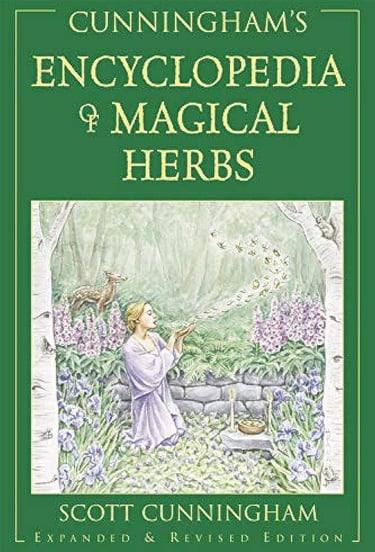
This page contains affiliate links*, meaning I may earn a small commission on qualifying purchases at no extra cost to you. Miss Dana's Wisdom showcases only products I personally use or genuinely believe my readers will love. Thank you for your support!