
Who Is Juno?
High above the marble temples of ancient Rome, beyond drifting clouds brushed with gold, there sits a goddess crowned in peacock feathers and lightning-lit majesty. Her voice carries through the heavens like a royal decree, yet beneath her regal presence lives the fierce heart of a protector.
She is Juno—Queen of the Gods, guardian of women, keeper of sacred vows, and defender of sovereignty.
Juno is not simply a goddess of marriage, as many tales reduce her to be. She is something far greater. She is the divine embodiment of self-worth, feminine power, protection, and sacred union—both with others and within oneself.
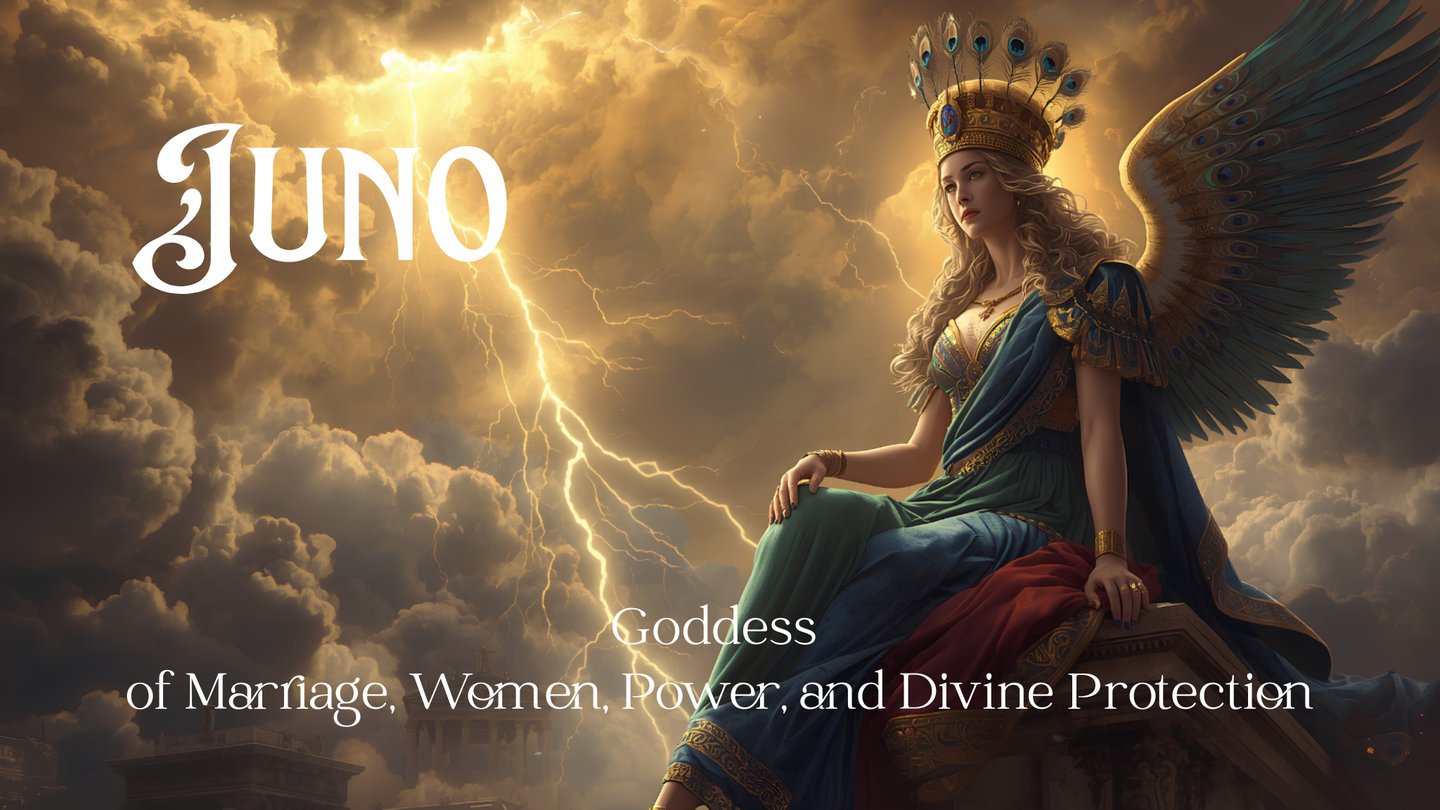

In Roman mythology, Juno is the powerful wife of Jupiter, king of the gods, and the queen of the Roman pantheon. She rules over:
Marriage and commitment
Childbirth and motherhood
Protection of women
Sovereignty and leadership
Sacred feminine authority
She is often compared to the Greek goddess Hera, but Juno carries a distinctly Roman essence—one rooted not only in devotion, but in strength, dignity, and divine rulership.
The ancient Romans honored her as one of the most important goddesses in all the heavens. Entire festivals were devoted to her, particularly during the month of June, which carries her name and became associated with weddings and sacred unions because of her blessings.
Sacred Symbols of Juno
Peacocks — Royal beauty, immortality, divine vision
Crowns & Scepters — Sovereignty and feminine authority
Lions — Strength and protection
The Moon — Feminine cycles and intuition
Gold & Sapphire Blue — Her regal colors
Juno’s magic is majestic and protective. She teaches women to stand tall, honor their worth, and protect what is sacred.
The Legend of Juno and the Peacock’s Eyes
Long ago, before peacocks bore their shimmering eyes upon their feathers, Juno had a faithful guardian named Argus, a giant with one hundred eyes who could see in every direction at once.
Juno trusted Argus deeply, for nothing escaped his watchful gaze.
One day, after tragedy and betrayal touched her heart, Argus was slain while carrying out his sacred duty. The queen of heaven mourned him greatly. Rather than let his loyalty fade into dust, Juno gathered his many eyes and placed them upon the tail feathers of her beloved peacock.
From that moment on, the peacock became her sacred creature—its jeweled feathers carrying the eternal reminder that true wisdom sees beyond illusion.
And some say that when sunlight catches a peacock’s tail just right, those ancient eyes still shimmer with Argus’s watchfulness, blessing those brave enough to walk in truth.
Juno as the Goddess of Sacred Union
Though often remembered only through stories of jealousy or marriage, Juno’s deeper magic is about alignment and sovereignty.
She asks:
Are you honoring your own value?
Are your relationships sacred and balanced?
Are you giving away your power—or standing fully within it?
To work with Juno is not simply to seek love. It is to seek worthy love, rooted in respect, truth, and divine reciprocity.
She is also a protector of women stepping into leadership, independence, and self-devotion.
Working with Juno’s Energy
Juno’s energy is powerful for:
Self-worth and confidence
Healthy relationships
Marriage blessings
Feminine leadership
Protection and emotional boundaries
Her presence is especially strong during:
🌕 Full moons
👑 Weddings or handfastings
🌸 The month of June
🦚 Times of reclaiming personal power
A Whisper from Juno
Final Thoughts
“You were never meant to shrink.
You were born crowned.
Stand tall in your truth,
And let the heavens remember your name.”
Juno is not merely the queen beside a king—she is the ruler of her own divine realm. She reminds us that love should never require the loss of self, and that true devotion begins within.
To walk with Juno is to reclaim dignity, honor sacred connection, and remember that feminine power is not something given.
It is something remembered.